Halname is a private journal with two modes. Mood tracking: tap green for a good moment, coral for a hard one, and watch your year take color. Thought tracking: when a thought weighs on you, work through a CBT thought record — catch it, name the thinking trap, weigh the evidence, and find a kinder, truer way to see it.
A ledger for how your days felt — and a tool for the thoughts behind them
Halname (حالنامه, "a chronicle of one's state") started as a simple nightly habit: write down one good thing and one hard thing, and look back at the whole picture at the end of the year. Our memory has a negativity bias — bad days shout, good moments whisper. A ledger keeps both honestly.
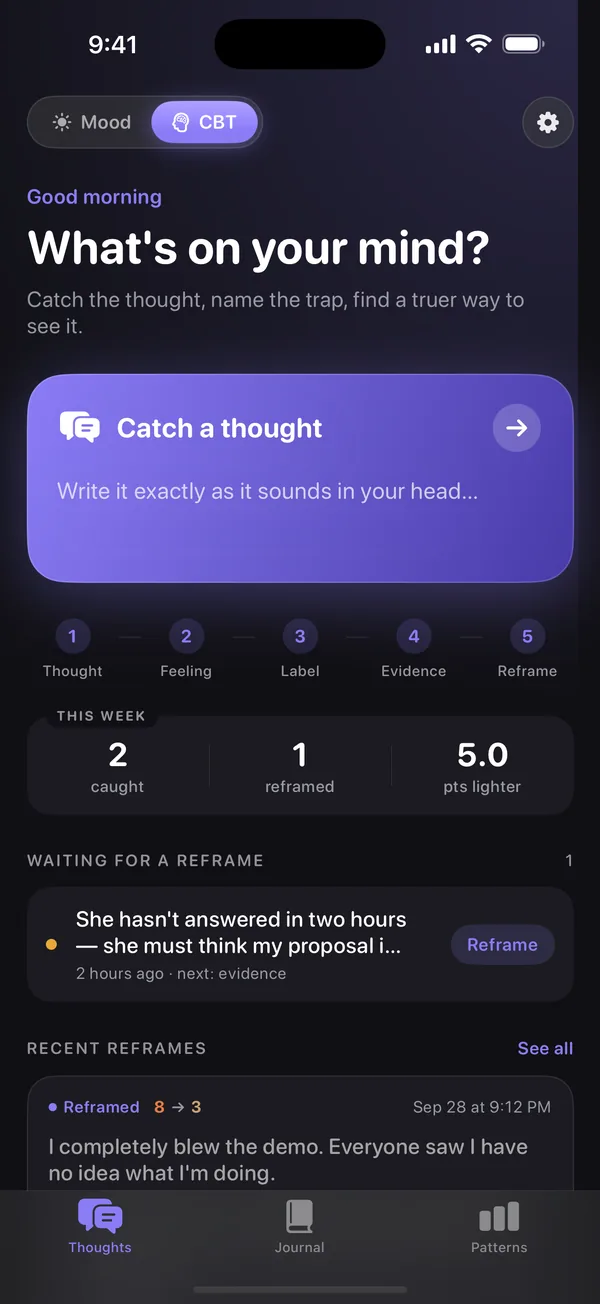
Some hard moments come with a thought that won't let go: "They must think I'm useless." "I always mess this up." For those, Halname has a second mode built on cognitive behavioral therapy, the same thought-record worksheet many CBT therapists use between sessions — redesigned to be calm, quick, and genuinely pleasant to fill in.
Two modes, one tap
Switch between them anytime
A single Mood | CBT switch sits at the top of the app. Each mode has its own home, its own history, and its own colors — your data in both stays put.
Mood tracking
Two taps a day. A year in color.
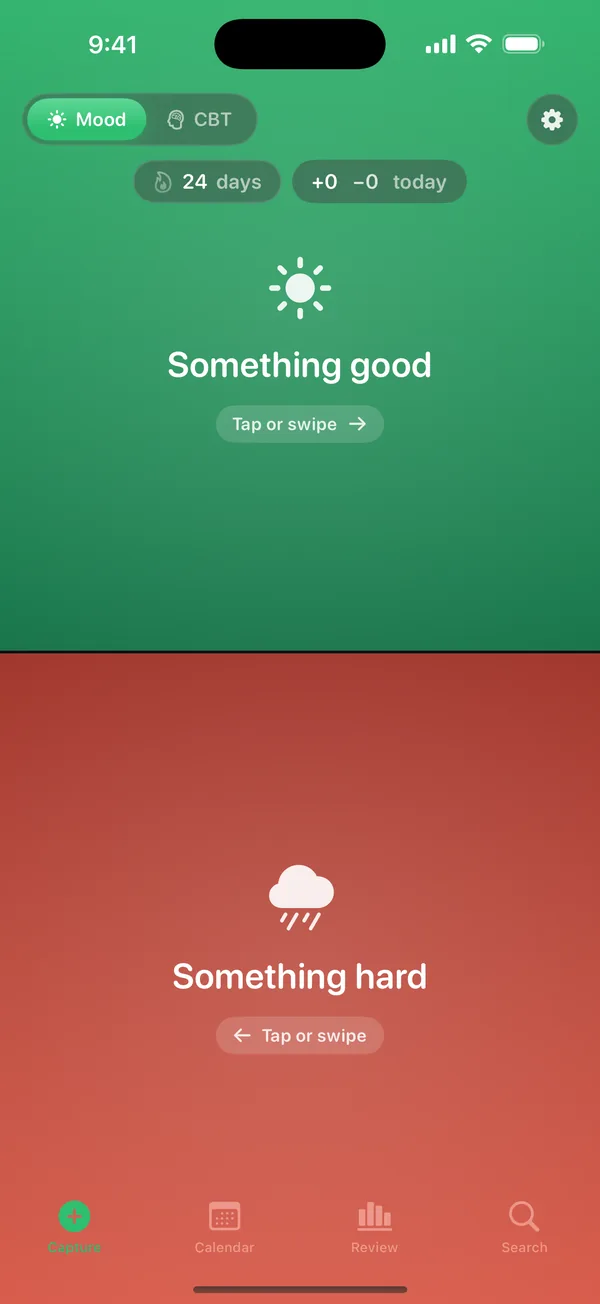
Tap a half — good or hard — and write one line. Under ten seconds.
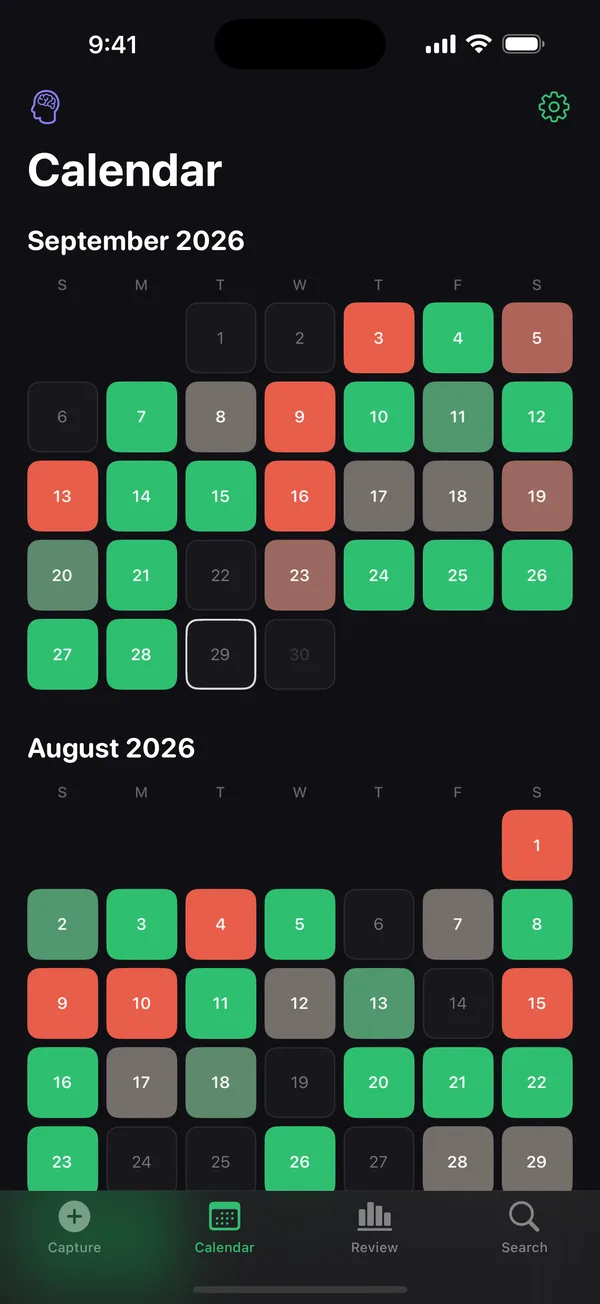
Every day blends from coral to emerald. Patterns appear at a glance.
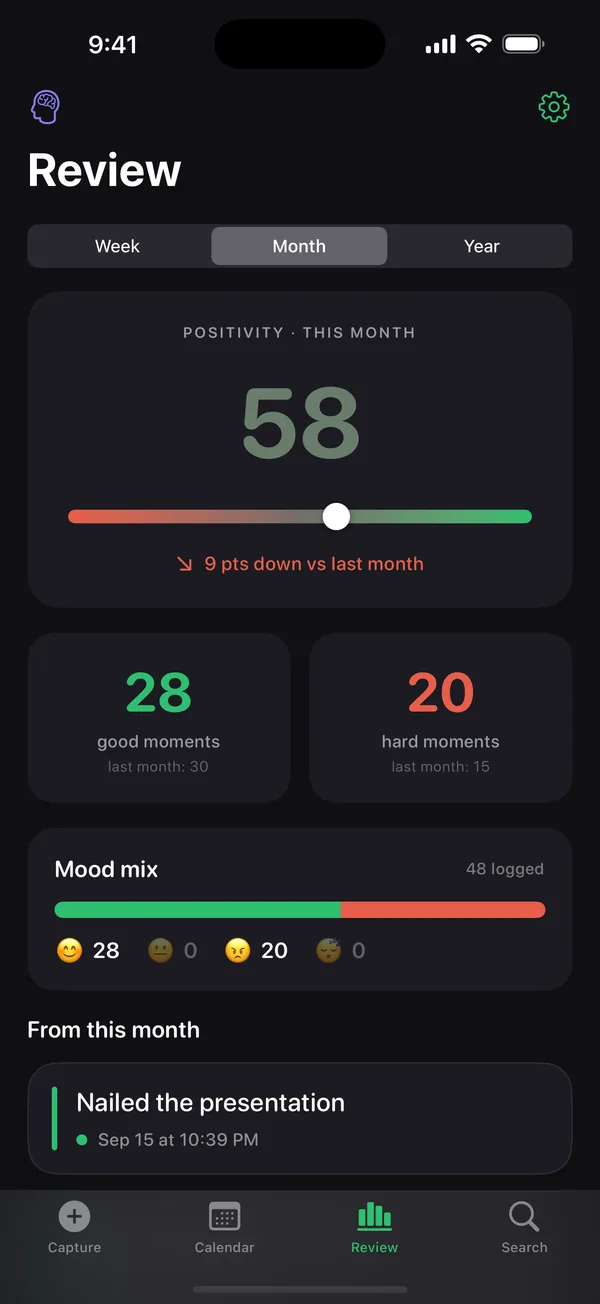
Weekly, monthly and yearly reviews, plus a story-style replay of your year.
Thought tracking New in 1.6 · iPhone
Catch the thought. Find a truer one.
A guided CBT thought record, one calm question at a time.
Twelve thinking traps, each explained with an example.
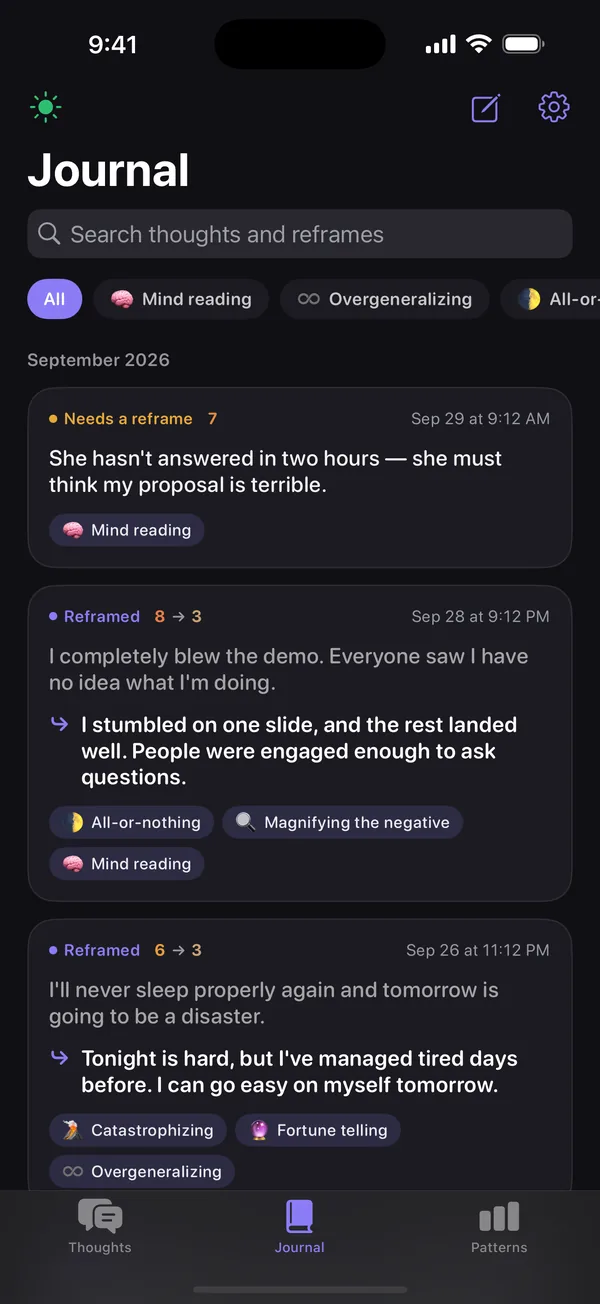
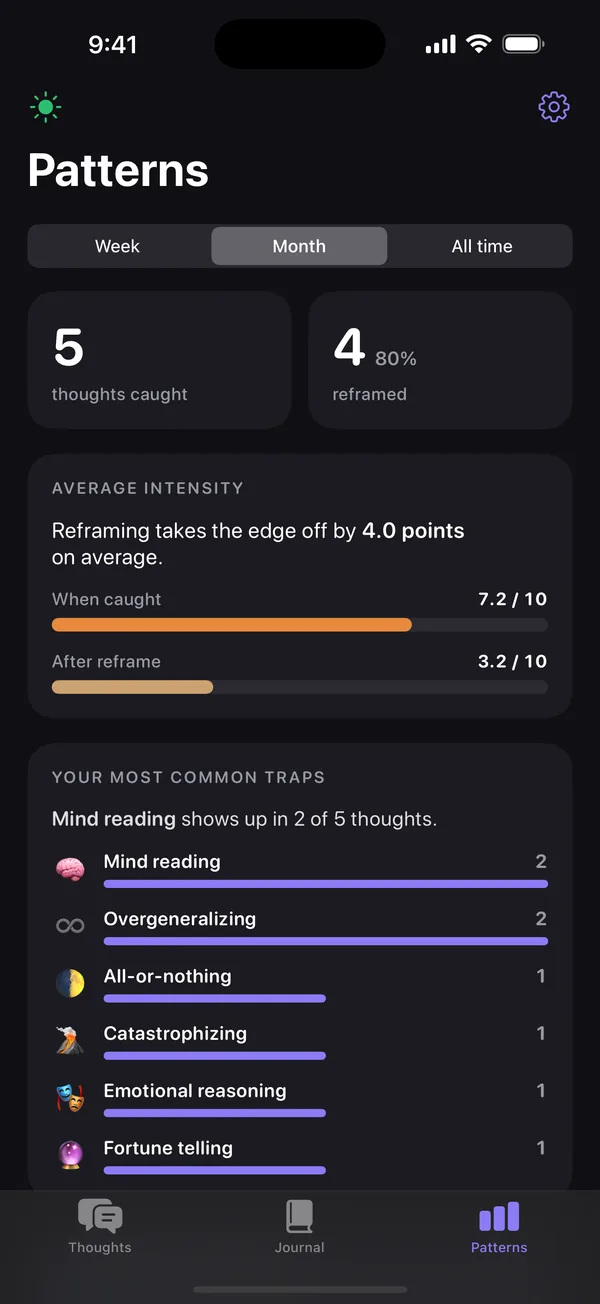
A journal of every reframe, and patterns in the traps you fall into most.
Mood tracking
Ten seconds, start to saved
1
Tap a half
The screen is split in two: emerald for something good, coral for something hard. Tap the one that matches the moment.
2
Write one line
One sentence is enough — "coffee with an old friend", "rough meeting". Save and get on with your day.
3
Watch it take color
Each day blends between coral and emerald based on what you logged. Weeks, months, and the year form a picture.
CaptureCalendarReview
Thought tracking
A thought record, the way a CBT therapist would walk you through it
Five short steps. Save after any of them and come back to finish later — often the reframe comes easier an hour after the thought.
1
Thought
Write it exactly as it sounds in your head, plus what was happening.
2
Feeling
Pick the emotions that fit and rate how intense they are, 0–10.
3
Label
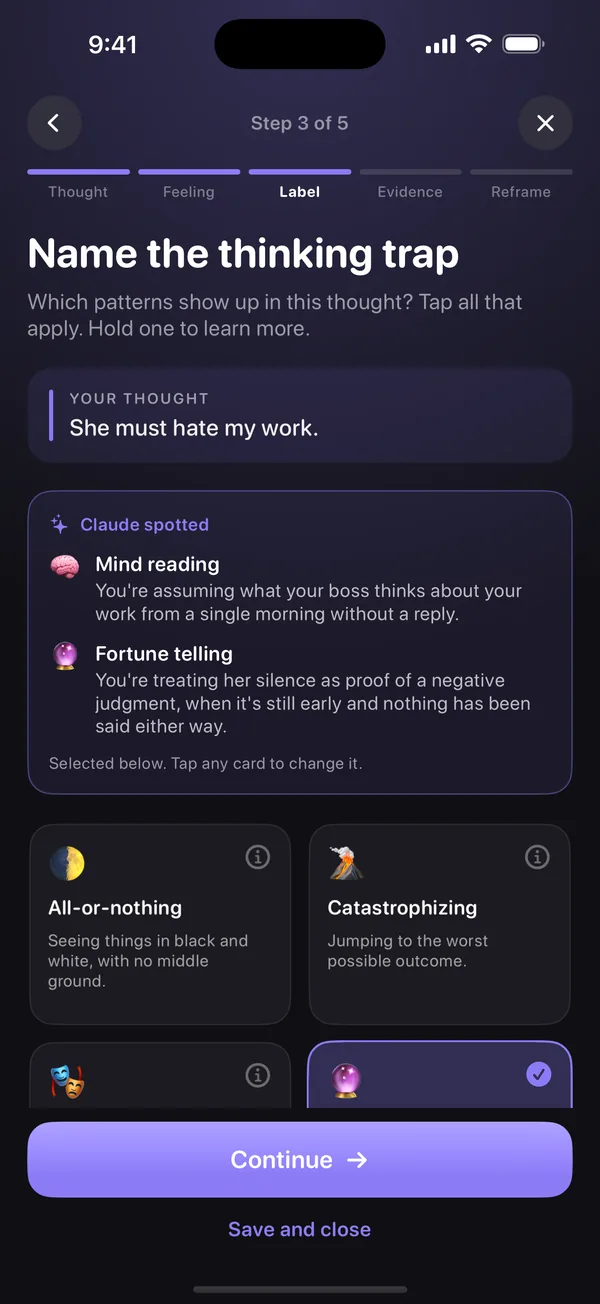
Name the thinking trap — mind reading, catastrophizing, all-or-nothing and nine more, each with an explanation.
4
Evidence
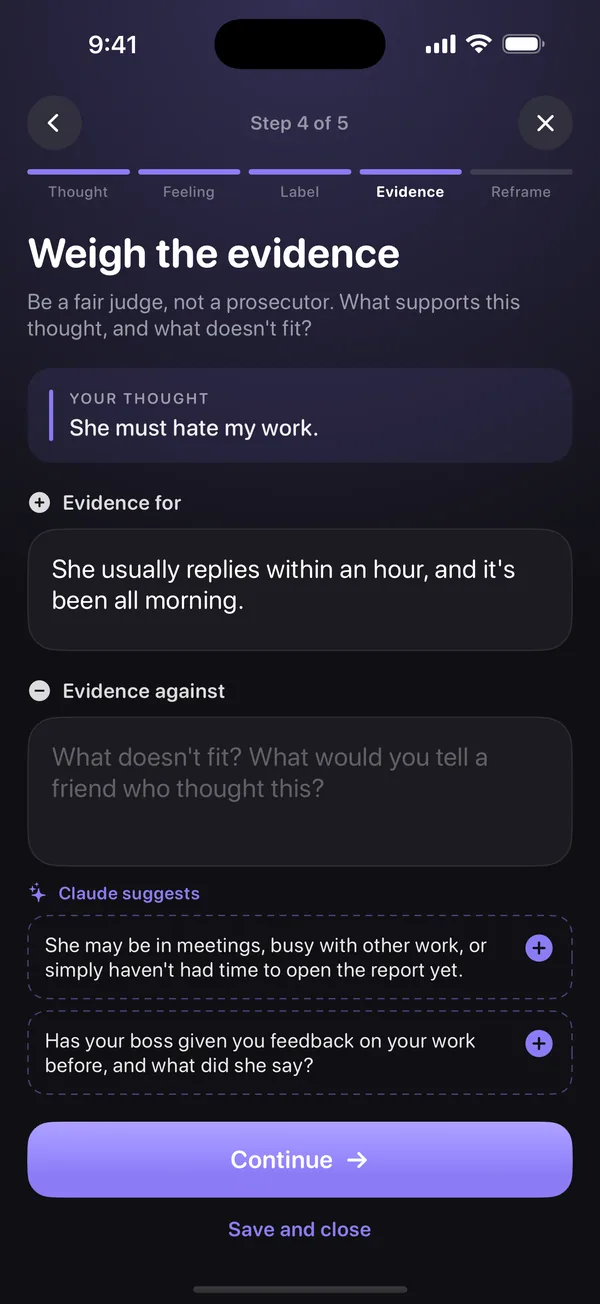
Weigh the evidence for the thought and against it, like a fair judge rather than a prosecutor.
5
Reframe
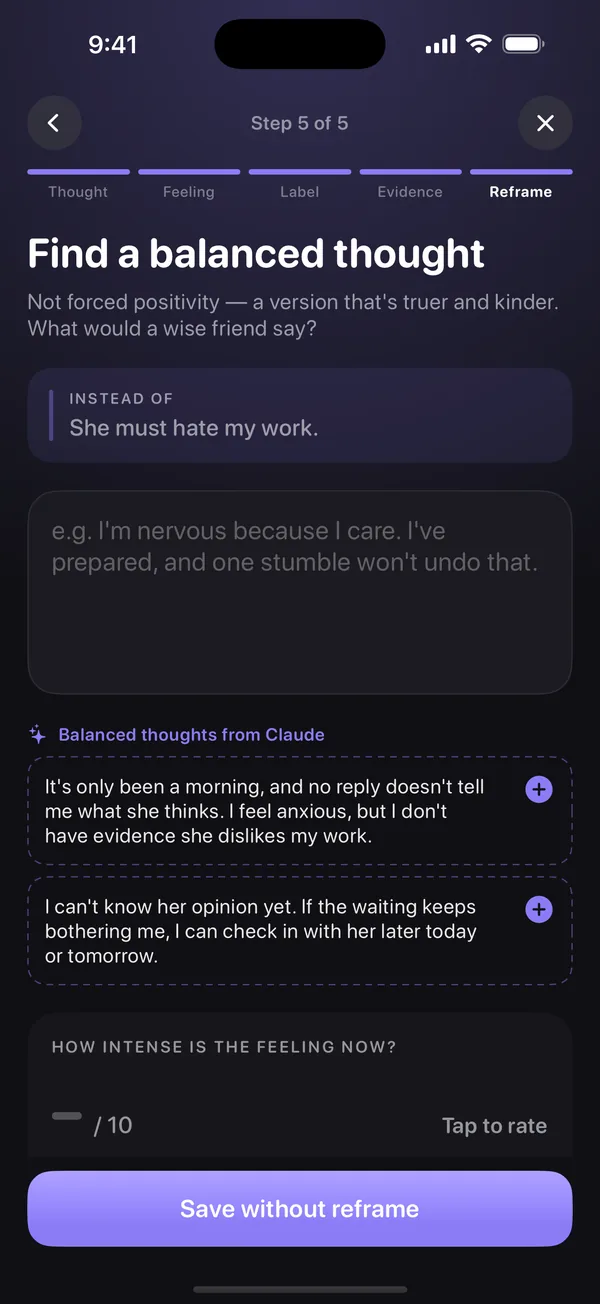
Write a balanced thought, then re-rate the feeling and see how much lighter it got.
Name the trapWeigh the evidenceFind a balanced thoughtJournalPatterns
Halname AI — optional
A kinder second opinion, whenever a thought gets loud
Turn on Halname AI and Claude, by Anthropic, joins each step: it labels the thinking traps in your thought and says which words give them away, suggests evidence that doesn't fit, and offers balanced thoughts that are believable rather than forced-positive. Everything is a suggestion you can edit or ignore — and it answers in whatever language you write in.
Only the thought record you're working on is sent. Nothing is stored by Halname.
If a thought sounds like a crisis, Halname shows helplines instead of suggestions.
Thought records themselves, and mood tracking, are always free.
Why it's paid. Everything else in Halname runs on your phone and costs us nothing to keep running — so it's free, for good. AI is different: every suggestion is a paid request to Anthropic's servers. The subscription covers that cost, and keeps Halname free of ads and free of selling data.
1 week free
$4.99 / month
or $39.99 / year — save 33%
iPhone. Cancel before the trial ends and you won't be charged.
Can't afford it? Your mental health comes first.
If the price stands between you and the help you need, email halname@dbay.dev and write us one line about why Halname AI would help you. We'll send you a code for a free year — no proof, no questions. (Like any App Store subscription, it renews after the year unless you cancel; you can cancel right after redeeming and still keep the whole free year.)
What is CBT? The TL;DR
Thoughts, feelings and actions are connected — and thoughts can be tested
What it is. Cognitive behavioral therapy (CBT) is a structured, present-focused talking therapy that helps you change unhelpful ways of thinking and acting.[1]
The core idea. How you interpret a situation shapes how you feel about it more than the situation itself. Spot the interpretation, test it against the facts, and the feeling often softens.[2]
Where it came from. Psychiatrist Aaron T. Beck developed cognitive therapy in the 1960s–70s, first for depression.[3] David Burns later popularized the list of "cognitive distortions" — the thinking traps Halname helps you name.[4]
The thought record. Writing down the situation, the automatic thought, the emotion, the distortion, the evidence for and against, and a balanced thought is one of CBT's core homework tools.[5][6]
Does it work? CBT is one of the most studied psychotherapies. A review of 106 meta-analyses (from 269 identified) found strong evidence for it, with the strongest support for anxiety disorders, somatoform disorders, bulimia, anger control problems and general stress.[7] It's a recommended treatment for depression, anxiety, PTSD and more.[1][8]
How it's usually done. A set number of sessions with a trained therapist — usually 5 to 15 on the NHS,[1] or 12 to 16 as the APA describes it[8] — with practice in between. That practice is where a thought record helps most.
Halname is a self-help journal. It isn't therapy, a diagnosis, or a medical device, and it doesn't replace a professional. It works best alongside a CBT therapist. If you're in crisis or thinking about harming yourself, contact your local emergency number or find a helpline near you.
Capture in seconds, reframe when it matters, review across a year — and keep every word private.
Two-tap capture
Good or hard, one line of text, saved. Designed to take less than ten seconds so you'll actually do it daily.
A calendar in color
Every day is tinted along a coral-to-emerald gradient from your entries. Patterns appear at a glance.
CBT thought records
Thought, feeling, label, evidence, reframe — one calm question at a time, with intensity before and after.
Suggestions from Claude
Optional Halname AI names the thinking traps and suggests evidence and balanced thoughts. Always yours to edit.
Reviews and patterns
Week, month and year summaries of your moods, and the thinking traps that show up most in your thoughts.
Search everything
Find that dinner, that hard week, that reframe that helped — searched on your device.
Gentle reminders
Set as many daily reminder times as you like. No guilt — just a quiet nudge to write the day down.
Encrypted sync, if you want it
Sign in with Apple or Google to back up and sync. Notes and thought records are end-to-end encrypted before they leave your phone.
Privacy
Your feelings are nobody's business
Halname works without an account: your moods and thought records stay on your phone, protected by your device's own encryption. If you turn on sync, notes and entire thought records are end-to-end encrypted on the device before upload — the key stays in your iCloud Keychain, so not even we can read them.
Halname AI is off unless you subscribe. When it's on, only the thought record you're working on goes to Claude to generate suggestions — never the rest of your journal — and we don't store or log what you wrote.
Halname is free on iPhone and Android. CBT thought records are new in version 1.6 for iPhone, with optional Halname AI from $4.99 a month after a free week.